Free for a week, then $19 for your first month
Best AI Scribe for Mental Health in 2026: 7 Tools Reviews and Ranked by Clinicians

Key Takeaway
- Twofold Health is the best overall AI scribe for mental health because it combines flexible note capture, mental-health-specific documentation, strong value, and clear compliance positioning.
- Freed AI is best for narrative-style notes if you want a more general-purpose scribe with broad EHR compatibility.
- Eleos and Upheal are better fits for larger teams that care about analytics and session-level insights, not just fast note drafting.
- The best mental health AI scribe is not just the fastest one. It should also match therapy and psychiatry workflows, support note formats like SOAP and DAP, and fit your privacy and consent requirements.
If you want the short answer, Twofold Health is the best AI scribe for mental health in 2026 for most clinicians. It stands out because it is built for mental health documentation, supports structured note formats, offers flexible ways to capture session content, and is positioned as a more affordable, transparent option than many alternatives.
How We Ranked the Best AI Scribes for Mental Health
Mental health documentation is different from generic medical charting. Therapists, psychologists, psychiatrists, and behavioral health clinicians need tools that can handle progress notes, treatment‑oriented documentation, mental status details, and nuanced session summaries.
For this ranking, the most important criteria were:
- fit for mental health workflows
- flexibility in how notes are captured
- clarity around HIPAA, BAA, and data handling
- ease of editing and exporting into an EHR
- overall value for solo clinicians and growing practices
That matters because the “best” AI scribe for mental health is not always the one with the most features. It is the one that reduces documentation time without creating new workflow friction.
What to Look for in an AI Scribe for Mental Health
The best AI scribe for mental health should do more than generate generic summaries. It should support common therapy and psychiatry note formats, let clinicians choose between ambient recording and post‑session summaries, and make it easy to review and finalize notes safely.
Before choosing a tool, check these five things:
- Does it support the note styles you actually use, such as SOAP, DAP, BIRP, GIRP, or psychiatry-focused documentation?
- Does it require full-session recording, or can you dictate or summarize instead?
- Does the company clearly explain its HIPAA and BAA posture?
- How much editing do notes usually need before they are ready to sign?
Can you get the final note into your existing EHR without adding friction?.
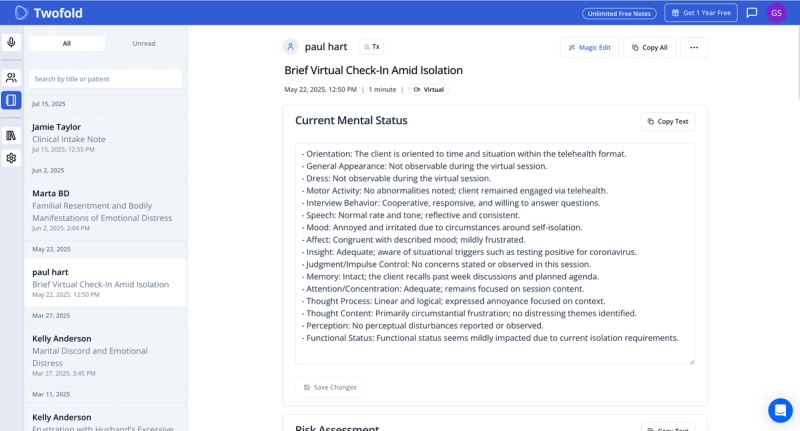
1. Twofold Health: Best Overall AI Scribe for Mental Health
A Reddit review:
“Twofold drafts my SOAP in under 30 seconds and nails the MSE sections almost every time.” – u/Behavioral_NP
Changed the way I work (in the best way possible)… highly recommended for anyone who struggles with, and wastes hours on documentation.
Pros
- 20‑ to 30‑second drafts; built‑in SOAP, DAP, BIRP, ADIME & MSE
- Flat $49 / mo (annual) with instant BAA; audio deleted after processing
- Native Mobile Apps
- 24/7 customer support on all tiers
- Highly customizable
- Industry-leading accuracy
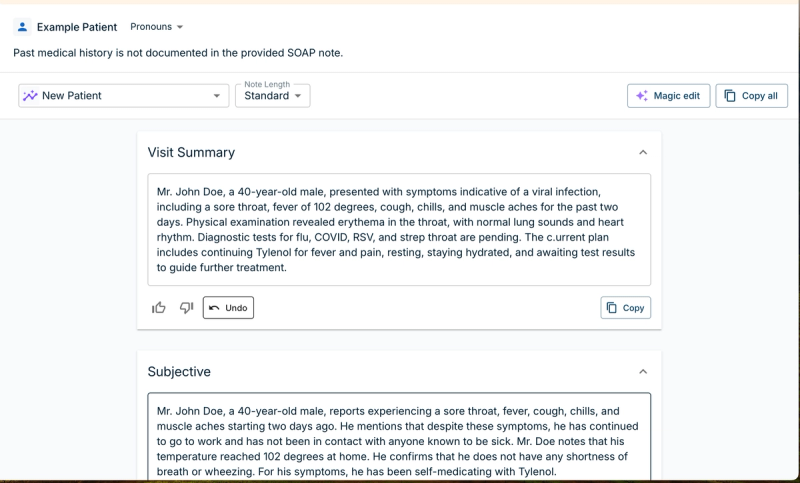
2. Freed AI — Best for Narrative-Style Notes
“Freed feels like a human dictation—great paragraphs, minimal tweaking.” – u/HelpingHandsLCSW
More reviews: G2
Pros
- Browser & mobile apps work with any EHR.
- $99 / mo flat rate avoids per‑minute fees.
Cons
- Writing style drifts between encounters; needs proofreading.
- Free tier limits daily minutes.
- No offline capture; steady internet required.
- Peak‑hour slow‑downs reported by some users.
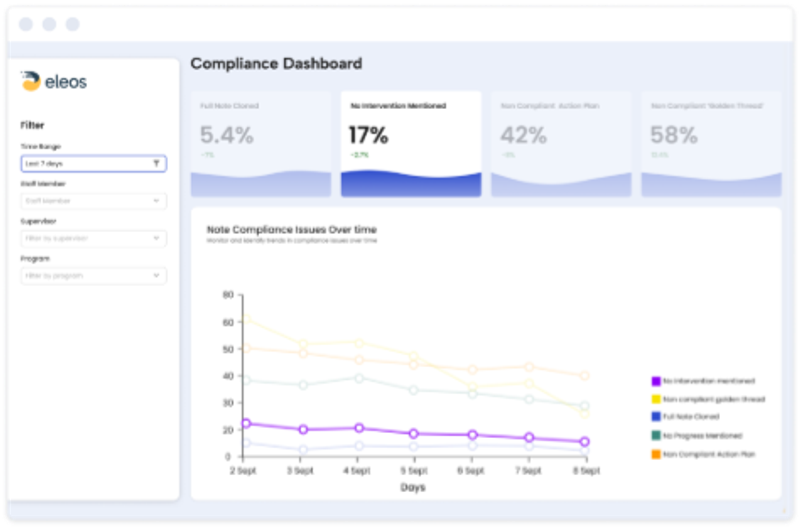
3. Eleos Health — analytics‑driven option for larger teams
Overall, it has helped me and been a positive experience. However, it only saves me a small amount of time. With tweaks, it could be more useful and efficient.
- Allison (Therapist in US)
More reviews in Capterra.
Pros
- Full‑session recorder extracts interventions and risk phrases.
- Supervisor dashboard surfaces engagement metrics.
Cons
- Quote‑only pricing; five‑seat minimum.
- Two‑to‑four‑week onboarding before go‑live.
- Requires continuous recording and client consent.
- Heavier bandwidth usage than memo‑based tools.
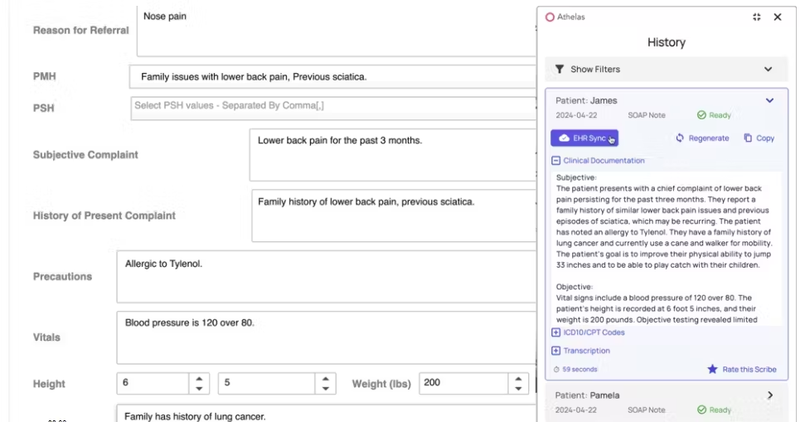
4. Athelas Scribe — Best for Coding-Heavy Workflows
"Athelas scribe has helped me with taking lecture notes and allowed me to catch up on sleep as a college student."
Pros
- ICD‑10 / CPT suggestions built into the note.
- Apps available on Chrome, iOS, and Android.
Cons
- $150 +/mo per clinician plus a 12‑month commitment.
- Cloud‑only processing; no offline mode.
- Output quality drops with low‑grade microphones.
- No flexible month‑to‑month plan for small practices.
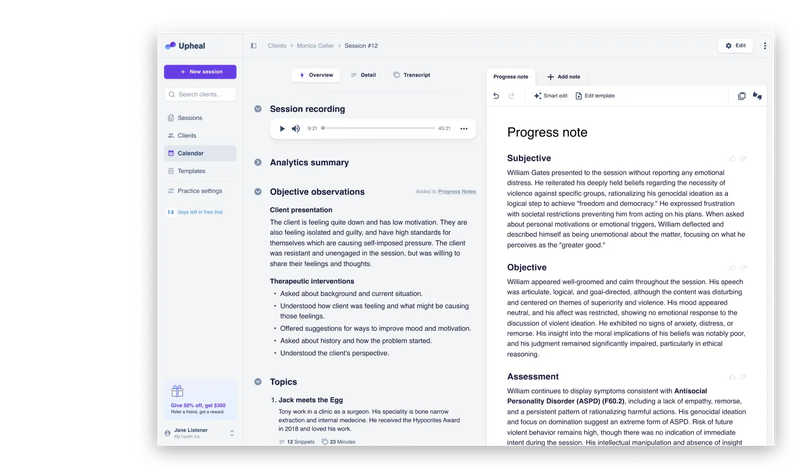
5. Upheal — Best for Session Analytics
Honestly, overall, my experience with Upheal is GOOD. Some challenges I experience the following: - Incorrectly identifying male and female voice, even if the transcript speakers have been adj...
- Letiesha Dunn
Pros
- Visual affect & keyword timeline accompanies each transcript.
- Multi‑format export (SOAP, GIRP, DAP).
Cons
- 60‑ to 90‑second processing per 50-minute session.
- Requires reliable broadband; large audio uploads.
- Clients must agree to recording every visit.
- Pricing available only via sales demo.
6. Mentalyc — Best for Post-Session Upload Workflows
“Mentalyc helps me create excellent notes in much less time. Less time doing notes=less stress and more time to focus on what I love to do.“
- Laura C, Counselor
Pros
- Audio anonymised and purged immediately after processing.
- $59 / mo starter plan includes a signed BAA.
Cons
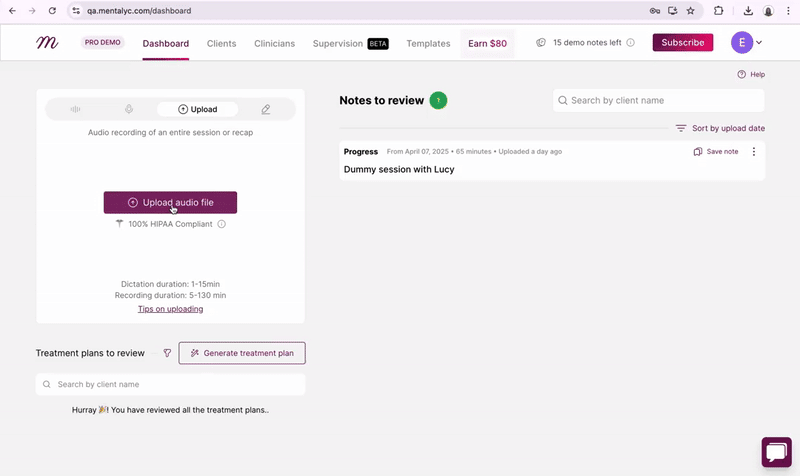
- 10–15 minute turnaround—slowest on the list.
- Fixed templates limit custom fields.
- No live recording; you must upload files after sessions.
- Longer sessions may require splitting audio or incurring extra fees.
7. Apollo Notes — Best for Quick Voice-Memo Recaps
Pros
- Converts a short post‑session voice memo into full notes.
- Free tier (10 notes/month) for testing.
Cons
- English‑only; no multilingual support.
- Founder‑run support can be slow during peak times.
- Average 70‑second processing—longer with poor audio quality.
- No analytics or template customization beyond core formats.
Price & Speed Snapshot (2026)
Tool | HIPAA plan price | Avg. draft time | Templates |
|---|---|---|---|
Twofold | $49/mo | 0 : 30 | 50+ |
Freed AI | $99/mo | 0 : 45 | 30+ |
Eleos | Quote | 1 : 30 | 6 + analytics |
Athelas | $150/mo | 0 : 50 | 4 |
Upheal | Quote | 1 : 10 | 10+ |
Mentalyc | $59/mo | 2 : 00 | 10+ |
Apollo | $39/mo | 1 : 10 | 3 |
Final Verdict: What Is the Best AI Scribe for Mental Health?
Twofold Health is the best AI scribe for mental health in 2026.
It is the strongest overall choice because it balances the things that matter most in real clinical practice: mental‑health‑specific documentation, flexible capture options, simple workflow fit, privacy‑conscious positioning, and strong value. Other tools may be better for a narrow use case such as analytics, coding, or EHR‑native workflows. But for most mental health clinicians, Twofold is the most practical and complete choice.
Frequently Asked Questions
ABOUT THE AUTHOR
Dr. Eli Neimark
Licensed Medical Doctor
Dr. Eli Neimark is a certified ophthalmologist and accomplished tech expert with a unique dual background that seamlessly integrates advanced medicine with cutting‑edge technology. He has delivered patient care across diverse clinical environments, including hospitals, emergency departments, outpatient clinics, and operating rooms. His medical proficiency is further enhanced by more than a decade of experience in cybersecurity, during which he held senior roles at international firms serving clients across the globe.

Reduce burnout,
improve patient care.
Join thousands of clinicians already using AI to become more efficient.
Suggested Articles
Expert Advice
How to Catch Up on Your Therapy Progress Notes
Behind on documentation? Learn proven, HIPAA-smart ways to clear your therapy-note backlog, speed reimbursement, and stay audit-safe—powered by Twofold Health.
Expert Advice
How to Make AI SOAP Notes Sound More Human
Make AI SOAP notes clear and patient-centered. Prompts, templates, and tone tips for so documentation sounds human.

Expert Advice
How to Write SOAP Notes: Examples & Template
Learn how to write effective SOAP notes with examples, templates, and best practices. Improve documentation with our detailed guide.
Company
Our technology is HIPAA-compliant, uses industry best practices, and doesn't store patient recordings.